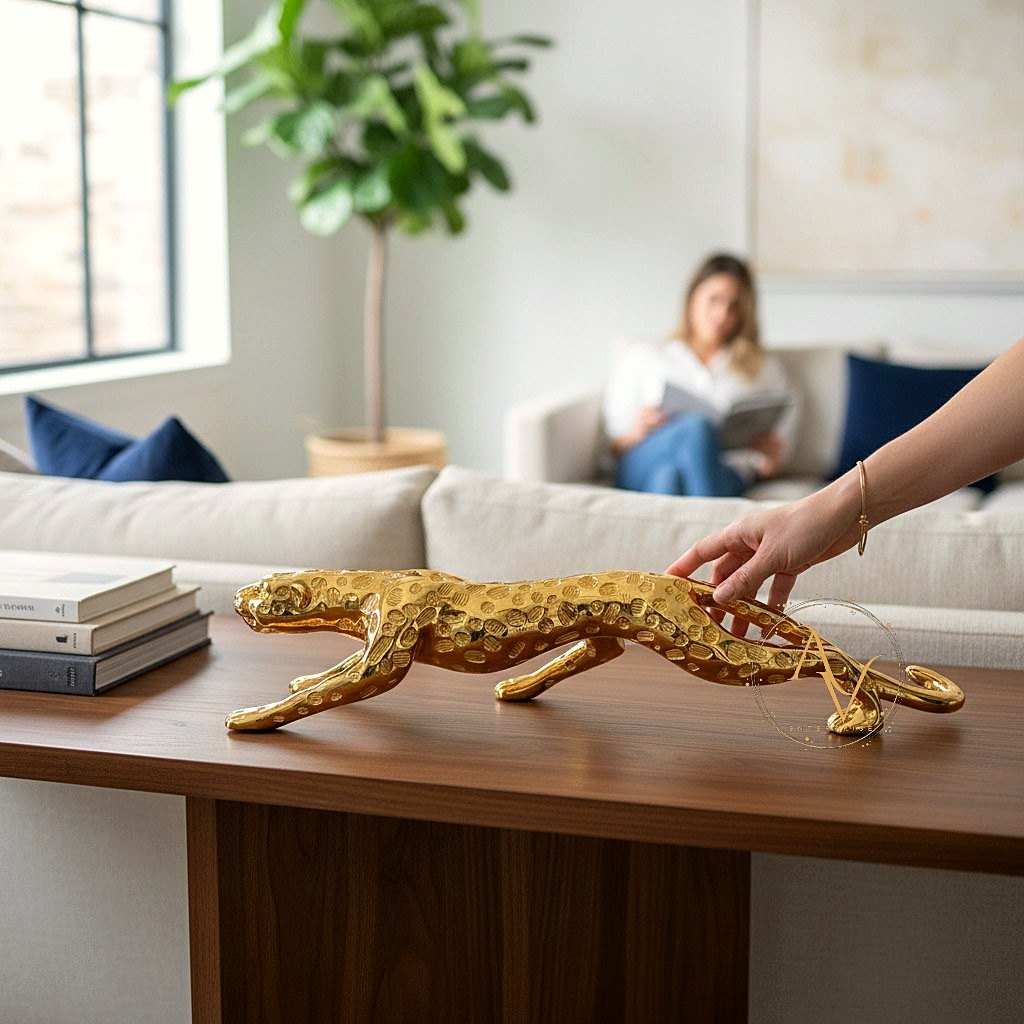
A home feels generic when every piece was chosen to be safe rather than loved — everything matches, nothing has a story, and nothing makes you feel anything when you walk in. The fix isn't more furniture. It's one authentic, characterful piece that breaks the catalog spell and makes the room unmistakably yours.
Let me describe your home without seeing it — and you might feel a little called out. Everything matches. Everything is “safe.” Guests say “oh, nice” but never ask about anything. Every piece was chosen because it “goes with everything.” And yesterday, you walked past your living room and felt… nothing.
If that landed, you don't have a decorating problem. You have what I call Designer Catalog Syndrome — a home decorated for an imaginary audience instead of the person who actually lives in it. The good news: it's the easiest decorating problem to fix, and it doesn't require an overhaul.
The 5 signs of Designer Catalog Syndrome
Check how many describe your space. Be honest — this only works if you are.
- You could film a furniture commercial in your home. Everything coordinates, nothing risks. It photographs beautifully and feels like a hotel lobby.
- Guests say “oh, nice” but never ask about anything. Real personality makes people ask “where did you get that?” Catalog rooms earn polite nods.
- You have a “guest aesthetic.” The rooms visitors see are decorated. The corner where you actually sit at 11pm is empty or generic.
- Every piece “goes with everything.” Beige, white, grey. “Timeless” — which, too often, just means forgettable.
- You walked past your space and felt nothing. The most honest sign of all. A home with personality makes you feel something every time.
Scoring: 0–1 signs — you're closer than you think. 2–3 — your taste is hiding. 4–5 — your home belongs to an imaginary audience, and it's time to take it back.
Why it happens (it's not your fault)
Nobody sets out to decorate a forgettable home. It happens one “safe” choice at a time. We're taught to buy things that “go with everything,” to avoid anything too bold, to keep resale value in mind. Each decision is reasonable. The sum is a room that could belong to anyone — which means it belongs to no one.
You didn't fail at decorating. You succeeded at decorating for an imaginary audience instead of yourself.
The fix is one piece, not a redesign
You don't need to repaint, replace the furniture, or start over. You need one piece with genuine character — something handcrafted that you chose because you love it, not because it's safe. One focal point reorganizes an entire room: your generic space becomes intentional, and your blank wall becomes a story.

A piece like this doesn't “go with everything.” That's exactly the point. It goes with you. Start with one wall, one corner, one surface — and let the rest of the room organize itself around something you actually love.
When you're ready, our collection is full of pieces chosen for character over safety — each one handcrafted by artisans we work with directly.
Frequently asked questions
Why does my home feel boring even though everything matches?
Because matching is not the same as meaningful. When every piece is chosen to coordinate and offend no one, the room becomes visually 'safe' but emotionally flat. Personality comes from pieces you love and that carry a story, not from a coordinated palette.
What is Designer Catalog Syndrome?
It's a home decorated for an imaginary audience rather than the people who live in it — everything matches, nothing has a story, and nothing makes you feel anything. The telltale signs are guests who say 'oh, nice' but never ask about anything, and walking past your own space and feeling nothing.
How do I make my home feel less generic?
Start with one authentic, characterful piece instead of redecorating everything. A single handcrafted focal point — a brass idol, a sculpture, a piece with real craftsmanship — anchors the room and lets the rest organize around it. Choose it because you love it, not because it matches.
Why do my rooms feel like a hotel?
Hotel rooms are designed to appeal to everyone and offend no one, so they use neutral, coordinated, forgettable decor. If your rooms feel that way, it usually means the pieces were chosen to be safe rather than personal. Adding one piece with genuine character breaks the effect.
Can one piece really change a whole room?
Yes. A single strong focal point becomes the anchor a room organizes around — the eye lands on it first, and everything else reads in relation to it. A room with three pieces you genuinely love looks better than one with twenty chosen for safety.

Komal Gupta — Founder, Avtaar Enterprise
Komal works directly with brass artisans across India, sourcing authentic handcrafted idols, spiritual decor, and statement pieces for homes in the USA. Avtaar Enterprise (formerly Artistic Kraft Creation on Etsy) exists to connect real makers with people who appreciate true artistry.