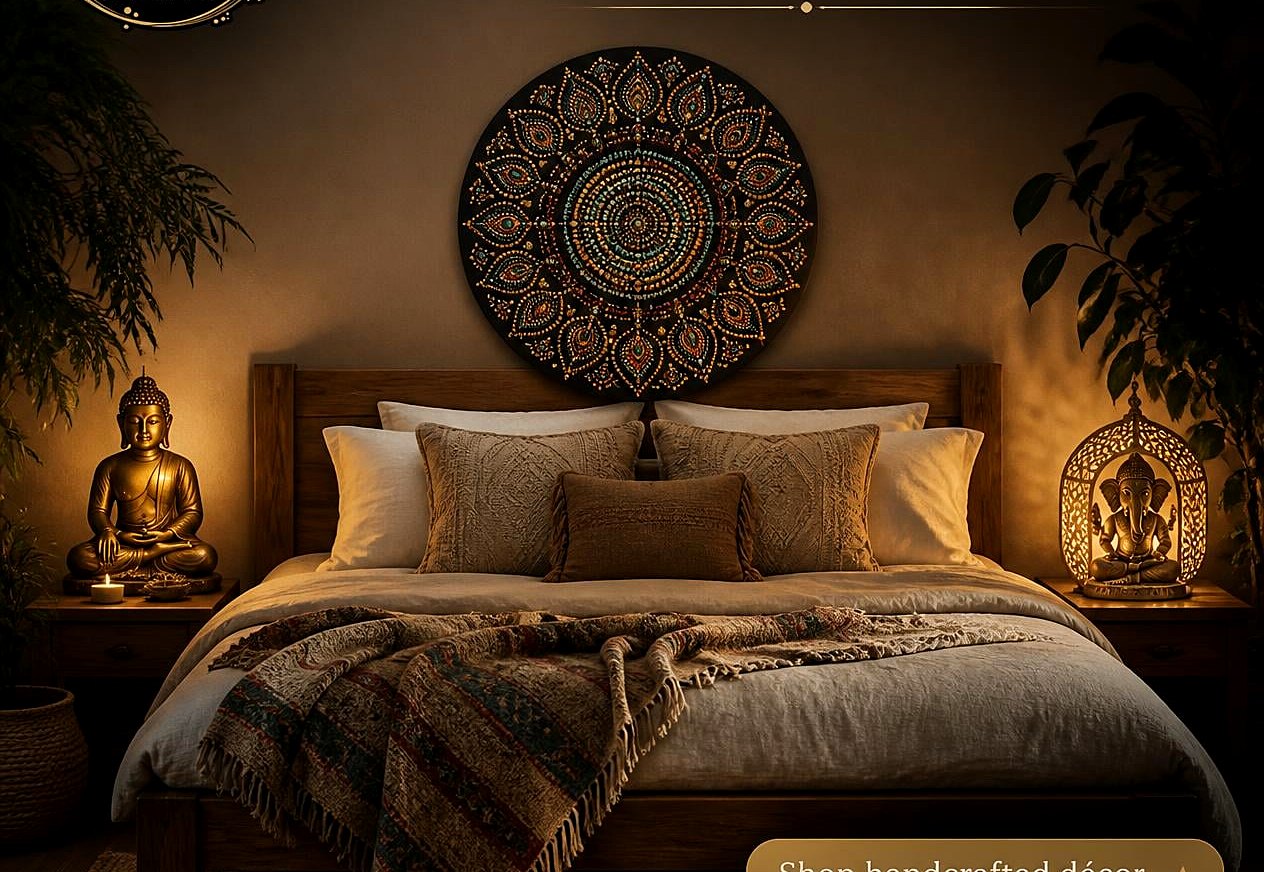
Place a sacred piece where you'll see it first when you wake and last before you sleep, ideally raised to eye level or above and facing into the room (east or northeast is traditional). Keep it off the floor and out of bathrooms, and give it clear, uncluttered space so it grounds the room rather than just decorating it.
If your anchor piece carries spiritual or cultural meaning — a Buddha, a Ganesha, a deity idol — then where you place it matters as much as the piece itself. Placement is what turns a beautiful object into something that quietly shapes the room and the way you move through your day.
What follows blends practical design sense with traditional guidance from Vastu and related customs. Treat it as a thoughtful starting point rather than rigid rules — the goal is a space that feels grounded and intentional to you.
Where to place a Buddha statue
A Buddha is a piece for stillness, so give it a calm, elevated spot. Traditionally it faces east (or into the room), sits at or above eye level — never on the floor — and lives somewhere you'll see it first thing in the morning and last at night. A meditation corner, a quiet shelf, or an entryway console all work. Keep the space around it uncluttered; a Buddha needs room to breathe.
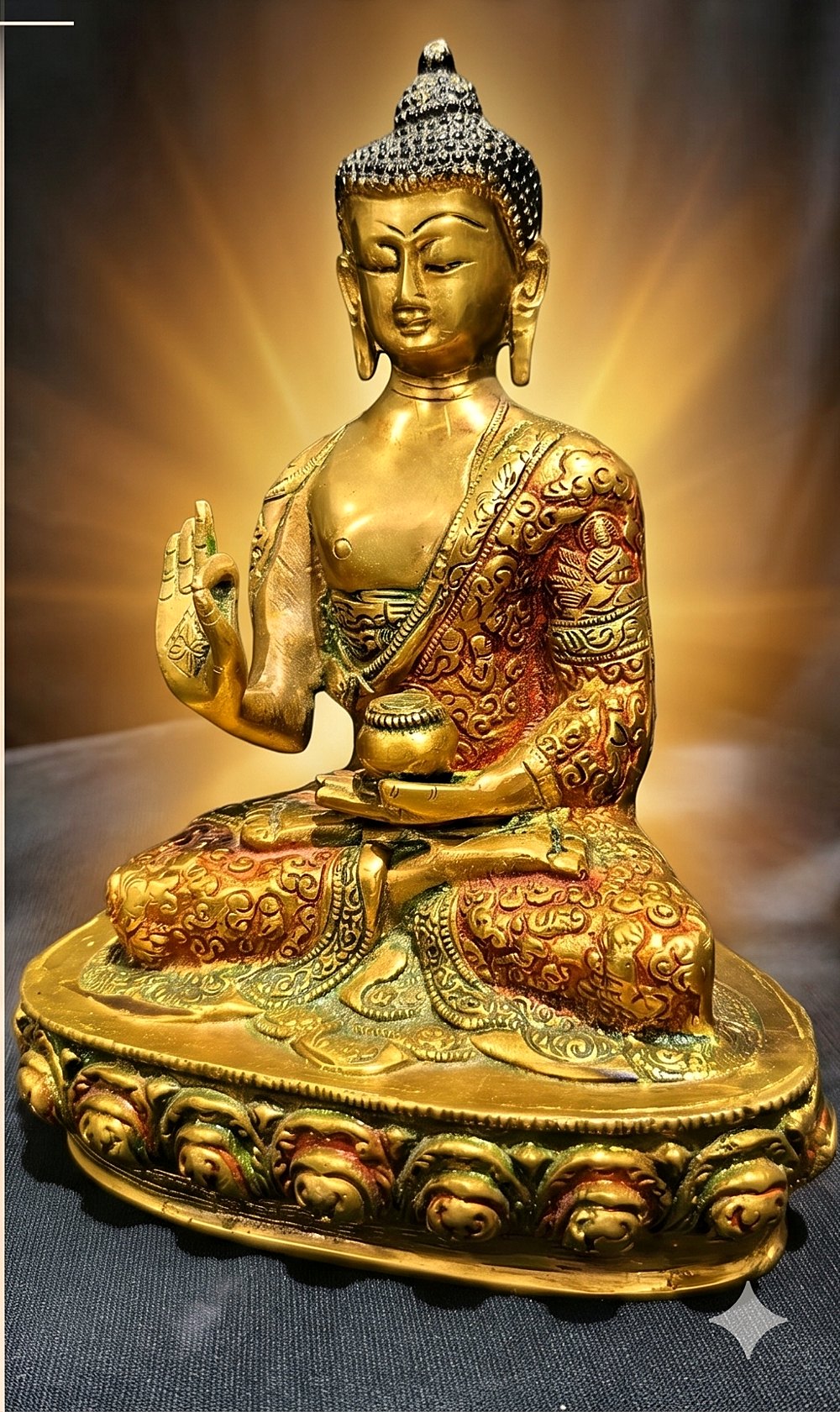
Avoid the two spots people most often get wrong: on the floor, and in or facing a bathroom. Both work against the sense of reverence the piece is meant to bring.
Where to place a Ganesha idol
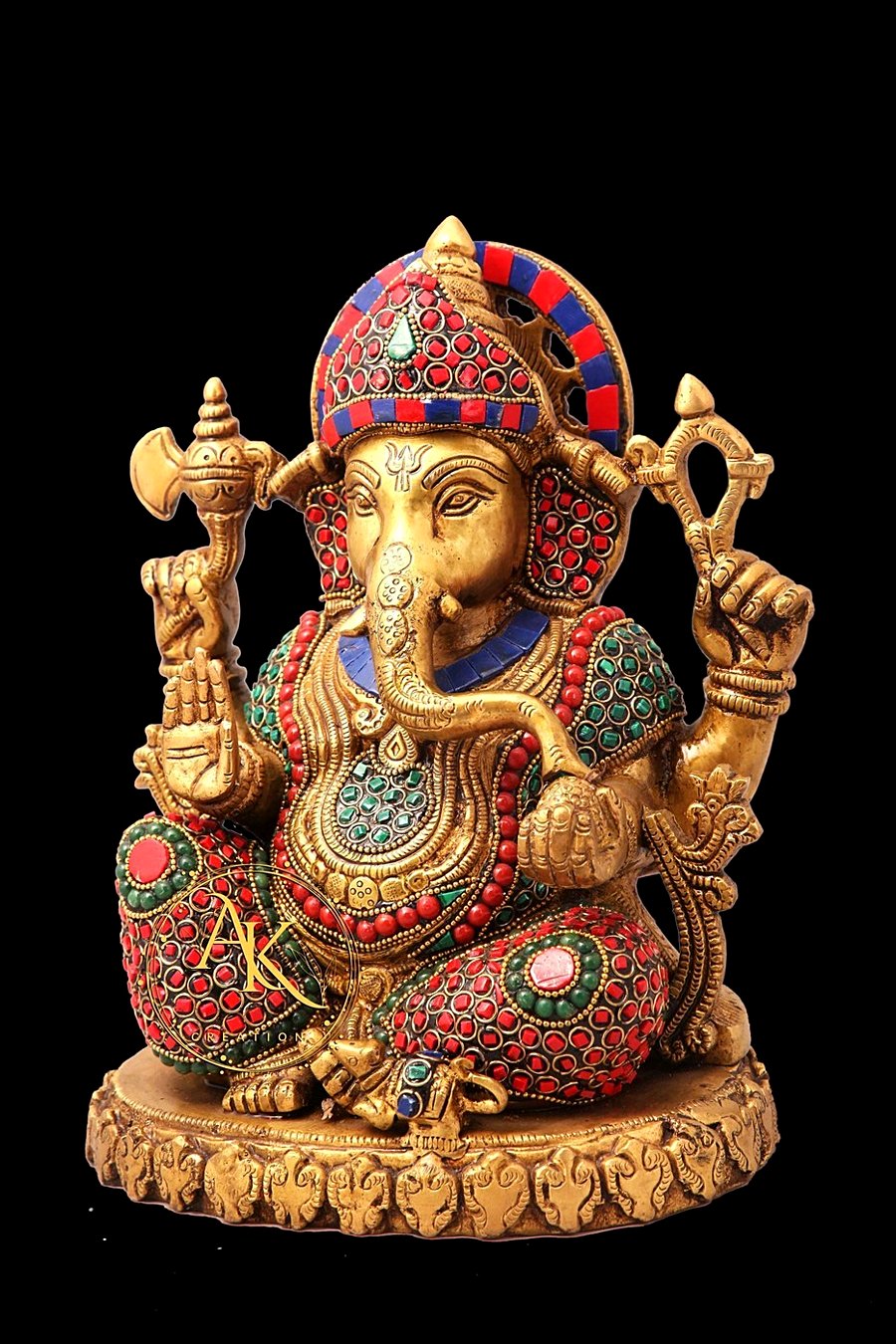
Ganesha is the remover of obstacles and a welcoming presence, which is why he's traditionally placed near the entrance of a home — facing into the room to invite good energy in, not out. Living rooms, home-office desks, and pooja spaces are all natural homes. East and northeast are the favoured directions. As with any deity idol, keep it raised and give it a clean, considered setting.
Three principles that apply to any sacred piece
Beyond specific deities, a few ideas carry across every meaningful object you place.
- Colour carries intention. Blues and purples invoke calm and rest — right for bedrooms. Warm earth tones and brass ground a space. Save bright, energising colours for living areas.
- Materials matter. Real brass, authentic stone, natural wood, living plants — you feel the difference when a piece is made with intention, and so does the room.
- Remove what doesn't serve. A cluttered sanctuary isn't a sanctuary. If a nearby object is just filler, move it. Space around a sacred piece is part of its power.
A cluttered sanctuary isn't a sanctuary.
The bedroom sanctuary formula
If you want one room to get right, make it the bedroom. The formula is simple: one authentic spiritual anchor piece + natural materials + a restful palette − everything that doesn't belong. Placed where you see it first on waking and last before sleep, a single grounding piece changes how the whole room feels — and it lasts decades, not seasons.
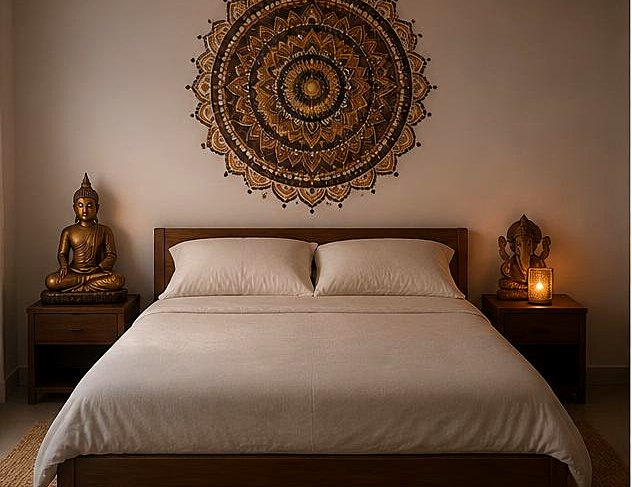
Every sacred piece in our collection is handcrafted by artisans and made from solid brass — built to hold meaning, and to last long enough to place with real intention.
Frequently asked questions
Which direction should a Buddha statue face?
Traditionally a Buddha faces east, or simply into the room rather than toward a wall. Place it at or above eye level — never on the floor — in a calm, uncluttered spot you see first thing in the morning and last at night. Avoid placing it in or facing a bathroom.
Where should you place a Ganesha idol at home?
Ganesha is traditionally placed near the home's entrance, facing into the room to welcome positive energy inward. Living rooms, desks, and pooja spaces all suit him, with east or northeast the favoured directions. Keep the idol raised and give it a clean, considered setting.
Can you keep a Buddha statue in the bedroom?
Yes. A Buddha suits a bedroom when it's raised to eye level, kept in a calm and uncluttered spot, and positioned where you see it on waking and before sleep. Restful colours and natural materials around it reinforce the sense of a sanctuary.
Where should you not place sacred idols?
Avoid the floor, bathrooms, and spots directly facing a bathroom, as well as cramped, cluttered corners. Sacred pieces are meant to be elevated and given clear space; crowding or lowering them works against the reverence they're intended to bring.
What is the best direction for placing a deity or pooja idol?
East and northeast are the traditionally favoured directions for deity and pooja placement, with the idol facing into the room. More important in practice: keep it raised, uncluttered, and somewhere it becomes part of your daily rhythm rather than background decoration.

Komal Gupta — Founder, Avtaar Enterprise
Komal works directly with brass artisans across India, sourcing authentic handcrafted idols, spiritual decor, and statement pieces for homes in the USA. Avtaar Enterprise (formerly Artistic Kraft Creation on Etsy) exists to connect real makers with people who appreciate true artistry.