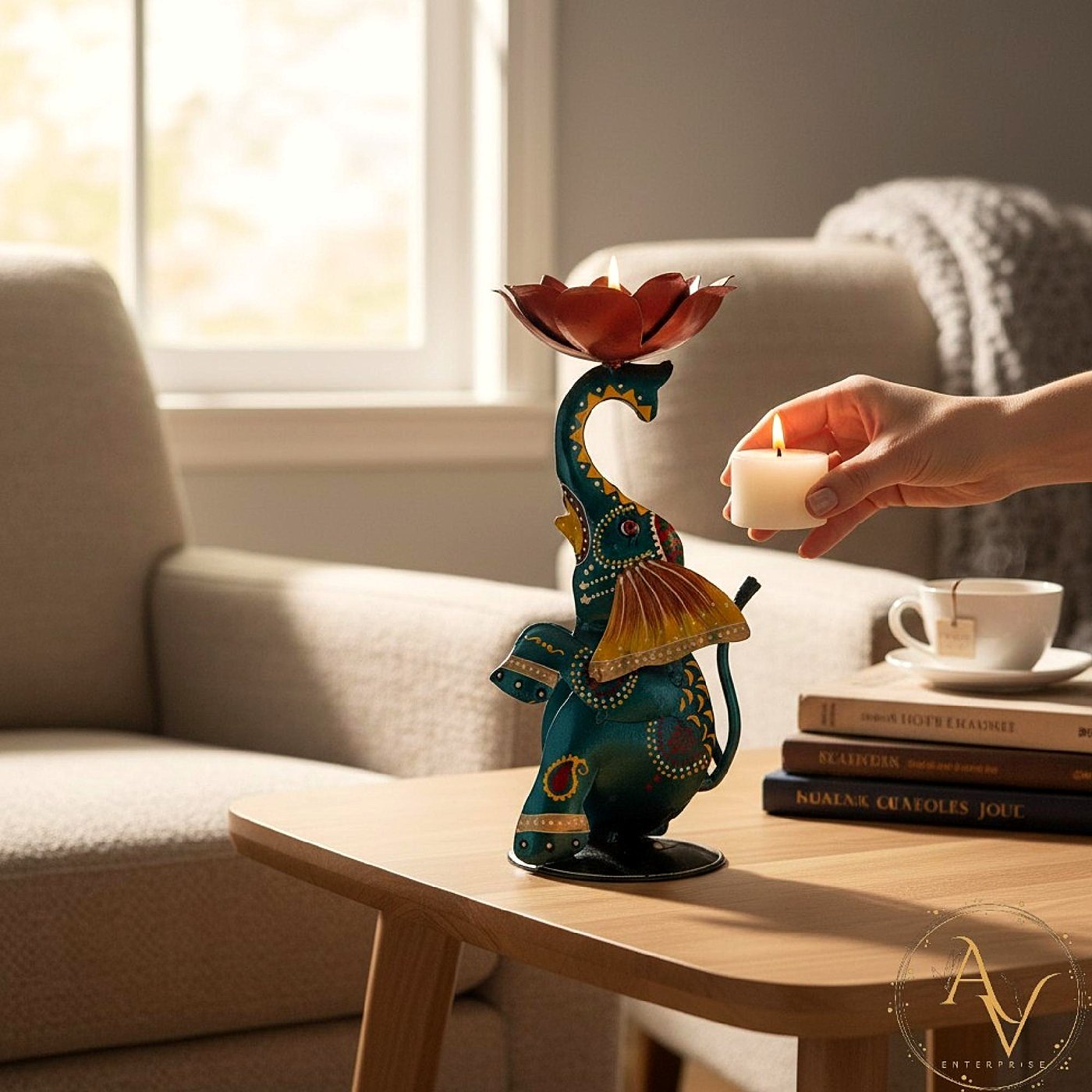
To transform a room without redecorating, add one statement piece — a single handcrafted focal point like a brass idol or sculpture. It anchors the space, and everything else visually organizes around it. Choose it because you love it, not because it “matches,” and place it where the eye naturally lands first.
Most people freeze because they believe transforming a room means changing everything — new furniture, new paint, a whole weekend and a big budget. That belief is exactly what keeps a room stuck. The truth is smaller and much more freeing: one piece can do the work of a redesign.
Designers have a name for it — a focal point. It's the thing your eye finds first when you enter a room, the anchor everything else arranges itself around. Get the focal point right and a generic space becomes intentional without touching anything else.
Step OneChoose the piece you actually love
Forget whether it “matches.” The best statement pieces don't blend in — they hold attention. Walk through a collection and notice which piece you keep coming back to, the one you'd defend if someone questioned it. That pull is the whole point. A handcrafted piece with real detail — hand-set stonework, hand-chiselled carving — carries a presence that mass-produced decor never manages.
Step TwoGive it room to be the star
A statement piece needs breathing space. Crowd it with five other objects and it becomes clutter; give it a clear surface, a bare stretch of wall, or a dedicated shelf and it commands the room. Negative space around a piece is what tells the eye “this matters.”

Step ThreePlace it where the eye lands
Put your piece where attention naturally goes: across from the entrance, on the wall you face when you sit, the mantel, a console in the hallway. You're not hiding it in a corner — you're giving it the seat of honour. Everything else in the room then quietly falls into supporting roles.
A living room with three pieces you genuinely love looks better than one with twenty chosen for safety.
Why one piece beats a full redesign
A redesign spreads your attention — and your budget — thin across dozens of forgettable choices. One considered piece concentrates it. It's less money, less risk, and far more impact, because a room is transformed by its best object, not its average one.


Pick one space this week — one wall, one corner, one surface — and give it a piece worth looking at. Browse the collection and notice which one you keep coming back to. That's your focal point.
Frequently asked questions
How do I choose a statement piece for my living room?
Choose the piece you're genuinely drawn to rather than one that merely matches your sofa. Look for real craftsmanship — hand-set stonework or hand-carved detail — which gives a piece the presence to anchor a room. If you keep coming back to it, that pull is the sign it's the right focal point.
What is a focal point in interior design?
A focal point is the element your eye finds first when you enter a room — the anchor everything else arranges around. It's usually a single striking piece, like a sculpture or idol, placed where attention naturally goes: across from the entrance or on the wall you face when seated.
Where should I place a statement piece?
Place it where the eye naturally lands — opposite the doorway, on the wall you face when sitting, a mantel, or a hallway console. Give it clear space around it; negative space signals importance and lets the piece command the room instead of blending into clutter.
Can one decor piece really transform a room?
Yes. A room is defined by its best object, not its average one. A single strong focal point reorganizes how the whole space reads, which is why one considered piece delivers more impact than a scattered, full-room redecoration — for less money and less risk.
What makes a good statement piece?
Presence and authenticity. A good statement piece has scale, detail, and craftsmanship that reward a second look — hand-set stones, hand-chiselled carving, honest materials like solid brass. It should make you feel something, not just coordinate with the room.

Komal Gupta — Founder, Avtaar Enterprise
Komal works directly with brass artisans across India, sourcing authentic handcrafted idols, spiritual decor, and statement pieces for homes in the USA. Avtaar Enterprise (formerly Artistic Kraft Creation on Etsy) exists to connect real makers with people who appreciate true artistry.